
India reasserted that Pakistan requested a cessation of firing via DGMO contact and addressed concerns about Pakistan's roles in UNSC committees.
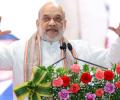
Union Home Minister Amit Shah said on Sunday that indigenously developed BrahMos missiles destroyed Pakistani air bases while its air defence system, borrowed from China, remained unused, during Operation Sindoor, which exposed its lies on terrorism to the world.

People along the Line of Control and International Border in the Jammu region continue to live under the shadow of death, with unexploded mortar shells fired by Pakistani troops still embedded in farmlands and residential areas even though hostilities have stopped for nearly a week. IMAGE: Kindly note that this image has been posted for representational purposes only. Photograph: / Rediff.com Despite the May 10 understanding between India and Pakistan, locals describe the border areas as a 'death trap'. Sixty-two-year-old Balvinder Singh, who returned to his home in Pargwal sector on May 14, recounted a narrow escape. "Two shells exploded in our compound, damaging our house. Three more landed on our farmland. We were terrified and told our family to stay away from the fields until the Army could help," Singh told PTI. Army engineers later came to the village and safely defused the unexploded shells, bringing a temporary sense of relief. "Fear is writ large on the faces of people to these death traps in border hamlets", he said. Scenes of destruction are evident rooftops torn apart, broken houses, windows punctured by shrapnel, and carcasses of cattle lying in pools of blood. The acrid smell of gunpowder still lingers in the air. Sardar Gurmeet Singh faced a similar ordeal. His family could not re-enter their home as a live mortar shell had sunk into the compound in a village close to the International Border. "The army's bomb disposal squad removed it after four days, allowing us to finally enter, back home," he said. Indian Army engineers have launched a sweeping clearance operation across border districts, defusing over 80 unexploded shells in the past five days -- including 6 in Pargwal, 19 in Rajouri, 42 in Poonch, and 12 along the IB. "These shells, mostly 120 mm calibre, have a range of 15 to 30 km and pose a serious threat to both civilian and military targets," an Army officer said. "Many of them were fired by Pakistan during recent hostilities." On May 7, the Indian Army launched Operation Sindoor, conducting precision strikes on nine terror hubs in Pakistan and Pakistan-occupied Jammu and Kashmir (PoJK) in response to the April 22 terror attack in Pahalgam that killed 26 people, most of them tourists. The subsequent retaliation by Pakistan pushed the region to the brink of war. From 7 to 10 of May, 27 civilians were killed and over 70 injured in Pakistani shelling in the Jammu region. Farid Din Gujjar, a resident near the border, expressed fear about returning to his fields. "Several shells created deep craters in our paddy land. We cannot resume work until all unexploded ordnance is cleared. It's a death trap," he said. Army units, in coordination with Jammu and Kashmir Police, have evacuated high-risk zones and issued stern warnings to residents not to touch any suspicious objects or unexploded shells. In one major operation, 42 live shells were safely destroyed in the Poonch villages of Jhullas, Salotri, Dharati and Salani. "All safety protocols were followed. The shells posed a serious danger to local lives," an Army spokesperson said, calling the effort a 'continued commitment to protect civilians and restore normalcy'. Poonch saw the vast majority of deaths due to shelling. Security officials said that Pakistan used a mix of mortar shells, armed drones, and missiles during the shelling spree, specifically targeting civilian habitations and border towns in Jammu, Samba, Kathua, Rajouri, and Poonch. As clearance operations continue, the border residents are slowly returning to their homes, but with caution, fear, and lingering uncertainty about shelling that may yet happen in the future.
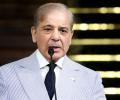
Leaders of Pakistan, Turkey and Azerbaijan agreed to strengthen their ties for the mutual benefit of their peoples, as well as for regional peace and prosperity. The understanding was reached at the Pakistan-Turkey-Azerbaijan trilateral summit in Lachin, Azerbaijan, attended by Prime Minister Shehbaz Sharif alongside presidents Recep Tayyip Erdogan and Ilham Aliyev. Azerbaijan announced a USD 2 billion investment in Pakistan's economy. Turkey expressed support for the ceasefire between Pakistan and India and hopes that it evolves into permanent peace.

Investigations said the accused was engaged in sharing classified details, including troop deployments and strategic locations, posing a threat to national security.

India's National Security Advisor Ajit Doval is expected to attend a major security meeting in Moscow next week, organized by Russia's Security Council. Doval is invited for the 13th international meeting of high representatives for security issues, taking place from May 27-29. The meeting, chaired by Sergei Shoigu, Secretary of the Security Council of the Russian Federation, will see participation from over 150 countries and international organizations. Pakistan's NSA, Lt Gen Asim Malik, is also expected to attend the meeting, leading to speculation of a possible face-to-face meeting between the two NSAs amidst heightened tensions between India and Pakistan following the Pahalgam attack and subsequent retaliatory actions.

It is necessary to shoot people in their chest if they shout slogans in favour of Pakistan and hoist Pakistani flags, Pravin Togadia said.

Over 75 government employees with terror links have been dismissed so far by the LG administration.
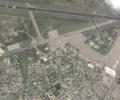
Pakistan's Prime Minister Shehbaz Sharif admitted that India's ballistic missiles hit Nur Khan Airbase and other sites on May 10, a rare acknowledgement that contradicts Pakistan's usual stance of denial when it comes to Indian military action.

Amid Indian strikes, PCB in huddle to decide whether PSL should continue
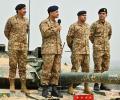
United States President Donald Trump will host Pakistan Army chief Asim Munir for lunch at the White House on Wednesday.
The exit deadline for Pakistani nationals visiting India on SAARC visas ended on April 26, while for the rest, except those on medical visas, it is set to close on Sunday, April 27 amid escalating tensions between the two countries over the Pahalgam terror attack that killed 26 people.

A UN Security Council report states that The Resistance Front (TRF) claimed responsibility for the Pahalgam terror attack and published a photograph of the attack site. The report also cites assertions that the attack could not have happened without the support of Pakistan-based Lashkar-e-Tayyiba (LeT).

Amid a storm surrounding his collaboration with Pakistani actress Hania Aamir, singer-actor Diljit Dosanjh has taken to social media with a cryptic message.
The Indian Air Force on Sunday said it has successfully executed its assigned tasks with precision and in line with national objectives during Operation Sindoor.

Interacting with the Indian diaspora in Kuala Lumpur, Banerjee said, "We have been in talks with them (Pakistan) for decades, despite changes in various paradigms and governments. But one thing remains constant, the conflict with Pakistan."

Following the precision strikes, India reached out to several world capitals and briefed senior officials about its anti-terror actions against Pakistan.

Following a deadly terror attack in Pahalgam, India has ordered all Pakistani nationals to leave the country within 48 hours. This has led to a mass exodus of Pakistani citizens from India, while several women married to Pakistani nationals and holding Indian passports are facing difficulties returning to their families in Pakistan.
Meanwhile, a precautionary blackout has been enforfced in the multiple areas amid the esclating tensions between India and Pakistan.
It is also the first time that TRF has been mentioned in any UN document. This marks the first mention of the LeT and any other Pakistan-based terror group in the report since 2019.
'But that was not our aim. Our objective was already achieved.'
Akhtar criticised vested interest groups in Pakistan, particularly the army, the political establishment and the extreme right wing, for blocking peace efforts between the two nations.

The Congress party launched a scathing attack on the central government regarding the Pahalgam terror attack and Operation Sindoor, demanding accountability from Home Minister Amit Shah and clarification on the number of Indian jets downed during the operation.
'He is intrigued by the intractability of Kashmir issue. With his interest in dealmaking and peacebrokering, he sees it as an exciting challenge to tackle.'

Operation Sindoor is not just a name but India's latest policy against terror as it has set a new standard, a 'new normal' in counter-terrorism measures, Prime Minister Minister Narendra Modi asserted on Monday.

More than 118 Pakistani forward posts and their surveillance system were completely destroyed by the BSF during Operation Sindoor, dealing a major blow to the neighbouring country, Union Home Minister Amit Shah said on Friday.
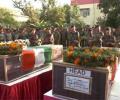
Speaking to media-persons after paying his last tributes to five soldiers, including two Army captains, who lost their lives in the Rajouri firefight, Lt Gen Dwivedi said, "While we lost five of our brave soldiers in the encounter, we also eliminated two dreaded terrorists. Our boys went after the well-trained and equipped foreign terrorists without giving any thought to their personal safety. This (taking out the dreaded terrorists) has dealt a major blow to the terror ecosystem and Pakistan. As per our estimation, 20-25 terrorists could still be operating in the area. We should be able to control the situation in a year's time with the help of locals."

A series of blasts took place in Srinagar city as the security agencies brought down a drone that was seen hovering over Batwara area of the city, close to an army installation, officials said.
The attacks against the Pakistani air force have taken them at least five years back and caused great damage to them and their Chinese and Turkish inventory of weapons.

'If they aim to remain aligned with the public sentiment, as any democratic government should, then they must respond. Why else would the prime minister have cut short his visit to Saudi Arabia? And why would he have instructed the home minister himself to travel to Srinagar to assess the situation firsthand? This suggests that something is indeed being planned. I am quite certain of that, although the exact form it will take remains to be seen.'
'What has changed is the desperation of Pakistan proxies and the separatists in their failure to foment violence and civilian casualties in Kashmir.'

India has strongly condemned Pakistan's recent drone attacks on Indian cities and civilian infrastructure, calling it a "deranged fantasy" and a desperate attempt to deceive the world. Foreign Secretary Vikram Misri also accused Pakistan of attacking religious sites, including a gurdwara in Amritsar, in an attempt to give a communal color to the situation. Misri criticized Pakistan's "blatantly farcical denial" of the attacks and said the country is resorting to disinformation tactics.
According to the Immigration and Foreigners Act 2025, which came into effect on April 4, overstaying, violating visa conditions, or trespassing in restricted areas could lead to three years in jail and a fine of up to Rs 3 lakh.

The Chandigarh administration on Friday sounded a fresh air raid siren, appealing to people to remain indoors. The development came amid escalating tension between India and Pakistan.

India's Foreign Secretary Vikram Misri said on Thursday that the choice of de-escalation is with Pakistan, as India only responded to the April 22 Pahalgam terror attack, which killed 26 people. He added that Pakistan has been escalating the situation with cross-border terrorism against India for decades.

The closed-door luncheon meeting came amid escalating tensions between Israel and Iran with Trump exploring Washington's possible involvement.

'Pakistan's only concern has been while they were on the FATF watch list was to distance their State institutions and organs from any direct connection with the actual execution of militancy inside Kashmir.'

The government stated that Operation Sindoor was launched in response to a 'barbaric' attack by 'Pakistan-sponsored terrorists,' focusing on dismantling terror infrastructure and neutralizing terrorists likely to be sent across to India.

External Affairs Minister S Jaishankar has informed a parliamentary panel that Pakistan was notified about Indian strikes on terror camps in their territory only after they were carried out. He also clarified that the decision to halt the military operation was taken bilaterally following a request from Pakistan, and there was no US mediation involved. Jaishankar emphasized India's zero-tolerance policy against terrorism and the importance of conveying a united message against it globally.
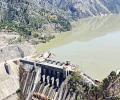
India has suspended the Indus Waters Treaty with immediate effect, accusing Pakistan of breaching the pact by refusing to negotiate modifications and engaging in sustained cross-border terrorism. The decision follows a recent terror attack in Jammu and Kashmir that killed 26 people. Pakistan has rejected India's move, calling it an "act of war."
